
Guide7 min read
What happens at the citizenship interview: a step-by-step guide
The naturalization interview is where everything comes together: your application, your English and the civics test, all in one meeting with a USCIS officer. Knowing each step in advance is the easiest way to stay calm and do well.
Most people feel nervous before their citizenship interview, and that is completely normal. The interview is an official meeting, but it follows the same pattern for almost everyone. If you know what will happen and in what order, there are very few surprises. This guide walks you through the whole day, from the notice in your mailbox to the results form in your hand.
Before the interview: the notice
After you file Form N-400 and attend your biometrics appointment (fingerprints and photo), USCIS schedules your interview and sends an interview notice with the date, time and office address. Read it carefully: it lists the documents you must bring, and it may contain instructions specific to your case.
If you cannot attend, follow the instructions on the notice to reschedule as early as possible. Missing an interview without rescheduling can lead to your application being closed.
Use the weeks before the interview well:
- Re-read your own N-400 application. The officer will ask about it, and your answers should match.
- Study the civics questions every day. If you filed on or after October 20, 2025, you take the 2025 civics test.
- Check the answers that change, such as your senators and the current Speaker of the House.
What to bring
Your interview notice is the official list, but most applicants bring:
- The interview notice itself.
- Your Permanent Resident Card (green card).
- A government-issued photo ID, such as a driver’s license or state ID.
- All passports and travel documents you have used since becoming a permanent resident.
- Any documents requested in the notice, for example marriage or divorce certificates, tax transcripts, or court records.
- Copies of documents you submitted, in case the officer asks to see them again.
Keep everything in one folder, in the same order as your application. It makes the review faster and shows the officer you are organized.
Arriving at the USCIS office
Plan to arrive early. USCIS offices have security screening similar to an airport, and the line can be slow. Electronic devices may be restricted inside; follow the rules posted at the entrance.
After security, you check in and wait to be called. When your name is called, an officer takes you to a private office. Most interviews are one-on-one, but some offices record interviews or have a second officer present.
Step 1: the oath to tell the truth
The officer will ask you to stand, raise your right hand and promise to tell the truth during the interview. This is not the citizenship oath; it is an oath that everything you say in the interview is true. The officer will also check your identity documents.
From this moment, the officer is also quietly assessing your English speaking: how well you understand and answer the questions they ask you in English.
Step 2: reviewing your N-400
Next, the officer goes through your Form N-400 with you. Expect questions about:
- Your personal details: name, address, date of birth, phone and email.
- Your residence and travel: where you have lived and trips outside the United States, with dates.
- Your employment or school history.
- Your marital history and children.
- The “yes or no” questions about moral character, taxes, criminal history, support of the Constitution and willingness to take the oath.
The officer may ask you to explain an answer or update information that has changed since you filed, such as a new address or a new trip. Answer honestly and simply. If you do not understand a question, ask the officer to repeat it or say it in a different way. Officers are expected to repeat and rephrase questions, and asking is not counted against you.
Step 3: the English test
Unless you qualify for an exemption (such as the 65/20 rule), the English test has three parts:
- Speaking: already assessed during the interview through your answers.
- Reading: the officer shows you up to three sentences. You must read one of them out loud correctly.
- Writing: the officer reads up to three sentences out loud. You must write one of them correctly. According to USCIS scoring guidelines, you should not fail because of spelling, capitalization or punctuation errors that do not change the meaning.
The sentences use simple words, many of them related to civics, such as “President,” “vote,” “Congress,” “freedom” and the names of holidays and historical figures.
Step 4: the civics test
The civics test is oral. The officer reads questions from the official list and you answer out loud. On the 2025 test:
- The officer asks up to 20 questions from the list of 128.
- You need 12 correct answers to pass.
- The officer stops early once you reach 12 correct, or once you have 9 wrong answers.
Short answers are best. If a question asks for two or three things (for example “Name three national U.S. holidays”), give the full number. If your mind goes blank, it is fine to say “Can you repeat the question, please?” and take a breath.
You can practice in exactly this format with our free citizenship practice test, which uses the same 20-question, 12-to-pass rules.
Step 5: your results (Form N-652)
At the end of the interview, the officer gives you Form N-652, Naturalization Interview Results. It tells you whether you passed the English and civics tests and what happens next. There are three main outcomes:
| Result | What it means | What to do |
|---|---|---|
| Granted (or recommended for approval) | You passed and your application can be approved. | Wait for your oath ceremony notice (sometimes the oath is the same day). |
| Continued | USCIS needs more before deciding: usually more documents, or a retest. | Send any requested documents by the deadline, or prepare for your second test. |
| Denied | Your application was not approved. | You will receive a written decision explaining why and your options. |
If you fail the English or civics test, USCIS gives you one more chance. You will be scheduled for a second test, usually 60 to 90 days later, and you will only be tested again on the part you failed. Our guide on how to pass the citizenship test explains how to use that time.
After the interview: the oath ceremony
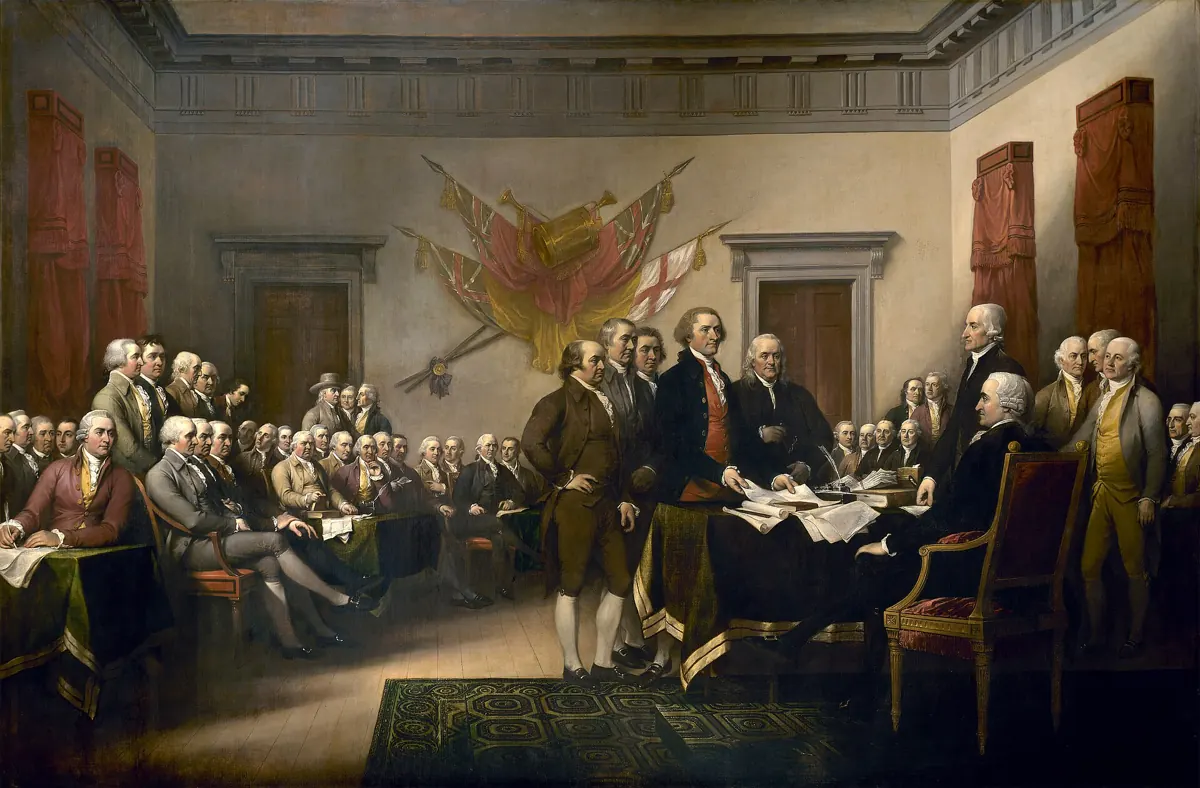
You do not become a citizen at the interview. You become a citizen when you take the Oath of Allegiance at a naturalization ceremony. Some offices hold a same-day ceremony; more often, you receive a notice with the date and place of your ceremony.
At the ceremony you return your green card, take the oath and receive your Certificate of Naturalization. From that moment you are a U.S. citizen. In the Oath of Allegiance, new citizens promise, among other things, to give up loyalty to other countries and to defend the Constitution.
Common mistakes to avoid
- Giving answers that do not match your application. Review your N-400 before the interview.
- Guessing when you do not understand. Ask the officer to repeat or rephrase the question.
- Not knowing the answers that change. Check the current officials the week before.
- Over-explaining. Short, honest answers are best, both in the review and in the civics test.
- Forgetting documents. Pack the night before, using the list in your notice.
- Arriving late. Security lines can be long; arrive early and relax while you wait.
The interview is the final step you control. Study steadily, know your own application, and bring the right documents, and you will walk in prepared. Start practicing now with the full list of 128 civics questions.
ReadyPass is an independent study tool and does not give legal advice. For questions about your case, speak to an immigration attorney or a DOJ-accredited representative.
Frequently asked questions
What questions do they ask at the citizenship interview?
The officer reviews the answers on your Form N-400 (personal details, travel, marital history, moral character questions), tests your English by reading and writing one sentence each, and asks up to 20 civics questions from the official list of 128.
Can I bring someone to my citizenship interview?
You may bring an attorney or accredited representative. If you qualify for an age or disability exception and test in another language, you generally bring an interpreter. Check your interview notice for what is allowed.
Do you find out the same day if you passed?
Usually yes. At the end of the interview the officer gives you Form N-652, Naturalization Interview Results, which says whether you passed the tests and whether your case was granted, continued or denied.
Can I take the oath the same day as the interview?
Sometimes. Some offices schedule a same-day oath ceremony, but most applicants receive a separate notice for an oath ceremony on a later date.
Start practicing now
Study all 128 questions with explanations and take a free practice test.
Sources
- USCIS: The naturalization interview
- USCIS: Test Scoring Guidelines
- USCIS M-1778 (09/25): 128 Civics Questions and Answers
- USCIS: Form N-400, Application for Naturalization
ReadyPass is not a government website. Always confirm requirements with USCIS.